In a world where sustainability is more important than ever, 3D printing wood has emerged as a game changer. Imagine creating furniture pieces or intricate designs without the hefty carbon footprint of traditional woodworking. Sure, the concept of printing with wood sounds like something out of a sci-fi novel. But believe it or not, it’s as real as that pile of IKEA furniture you’ve been meaning to assemble. So, strap in and join the journey into the fascinating universe of 3D printing wood, where trees meet technology in a grand design adventure.
Understanding 3D Printing Technology
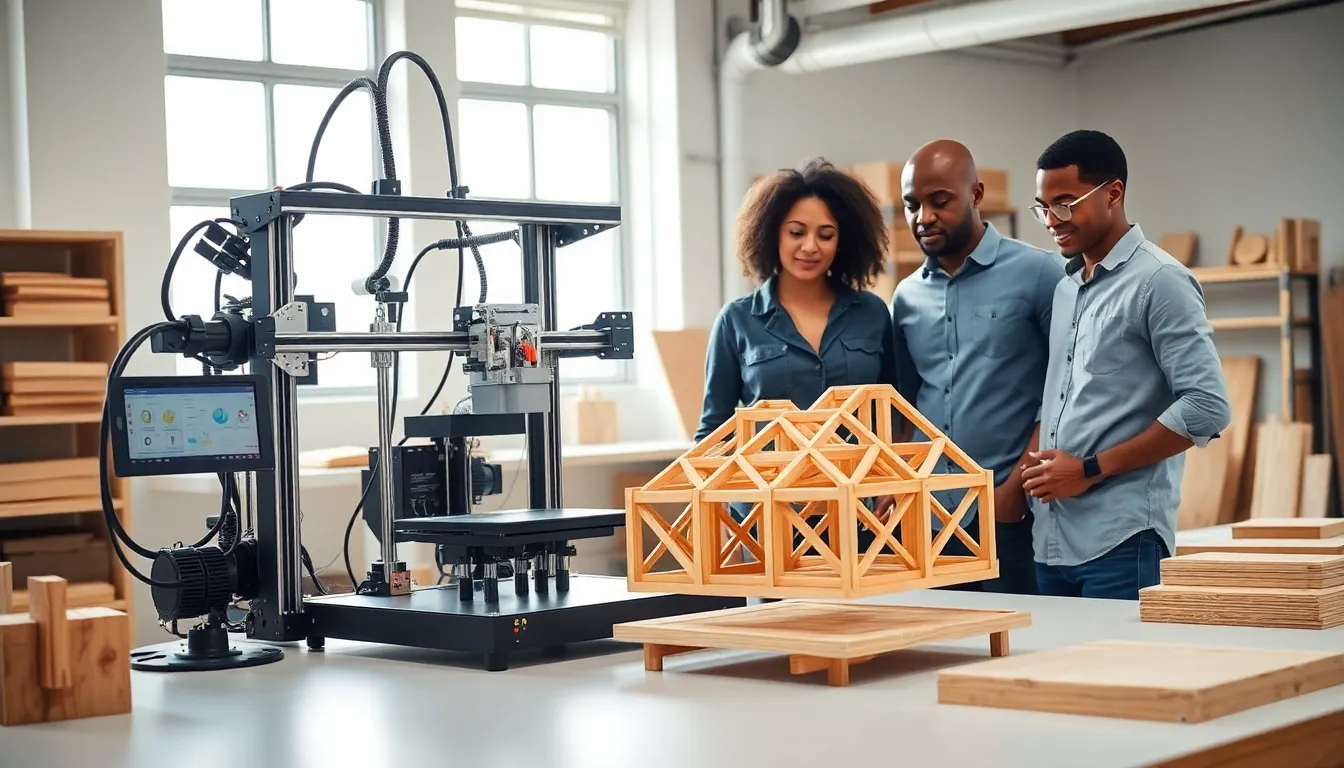
3D printing is revolutionizing manufacturing, enabling designers to create complex structures without traditional constraints. At its core, this technology involves layering materials to form a three-dimensional object, offering unprecedented design flexibility. Understanding how it integrates with wood opens up exciting possibilities. While traditional woodworking requires craftsmanship and precision, 3D printing allows for rapid prototyping and testing. You can design virtually anything, from a simple vase to sophisticated furniture, using a computer-aided design (CAD) program before bringing it to life in a matter of hours. This old-meets-new process marries craftsmanship with cutting-edge technology.
Types of 3D Printing Methods Used for Wood
When it comes to 3D printing wood, several methods reign supreme.
- Fused Deposition Modeling (FDM): This is one of the most popular methods. It works by extruding melted plastic filament, which can be infused with wood fibers to give that authentic wooden finish.
- Stereolithography (SLA): Using a UV light source, SLA hardens liquid resin to form intricate designs. Although it’s less common for wooden outputs, resins can be mixed to simulate wooden textures.
- Binder Jetting: This impressive method involves using a binder to interlace powdered wood particles, allowing for the creation of complex geometries.
Each of these methods has its strengths, allowing creators to choose according to their specific needs and desired finish.
The Process of 3D Printing with Wood Filaments
The process begins with selecting the right wood filament, typically a blend of PLA (Polylactic Acid) and finely ground wood particles. Once the design is crafted, a 3D printer layers the filament following the model created in CAD.
Benefits of 3D Printing with Wood
The benefits are plentiful. First and foremost, it significantly reduces waste: traditional woodworking can produce substantial scraps, whereas 3D printing optimizes material usage. Besides, the infusion of wood particles into plastic filaments creates lightweight yet sturdy objects with an authentic appearance and feel. Not to mention, 3D printed wood products have far less impact on the environment by minimizing deforestation and using sustainable materials. Finally, the precision afforded by 3D printing allows for customization, making it easy to create unique pieces that reflect individual styles and requirements.
Challenges and Limitations of 3D Printing Wood
While 3D printing wood offers various advantages, it is not without its challenges. For starters, achieving the right consistency in filament composition can be tricky. Too much wood powder can result in poor print quality, while too little may defeat the purpose of mimicking wood. Also, the mechanical properties of 3D printed wood can differ considerably from those of solid wood, affecting durability.
Another limitation is print speed. Unlike traditional woodworking, where pieces can be shaped quickly, 3D printing can be time-consuming, especially for larger items. Finally, the technology is still evolving, making it challenging to find reliable and high-quality materials, particularly if specific properties are desired.
Applications of 3D Printed Wood Products
The applications of 3D printed wood products are growing rapidly. On the artistic side, designers are crafting everything from decorative items to complex sculptures, infusing creativity into home décor.
In furniture design, customizable tables and chairs are being produced, allowing for personalized touches that traditional methods can’t easily replicate. Aside from aesthetic applications, 3D printing wood is also being utilized in the construction industry. Companies are exploring how to use this technology for creating building components that are both sustainable and fit for purpose.
Future Trends in 3D Printing Wood
The future of 3D printing wood looks promising as demand for sustainable products rises. Emerging technologies, such as improved materials and advanced printing techniques, are expected to enhance the quality and efficiency of wood products.
Bioprinting might take center stage, using more natural resins and fibers to create wood-like materials that are more sustainable. Innovations in software will also allow for better design capabilities, enabling more intricate patterns and structures that have yet to be explored. As manufacturers refine their processes, the potential for 3D printing wood in various sectors seems limitless.